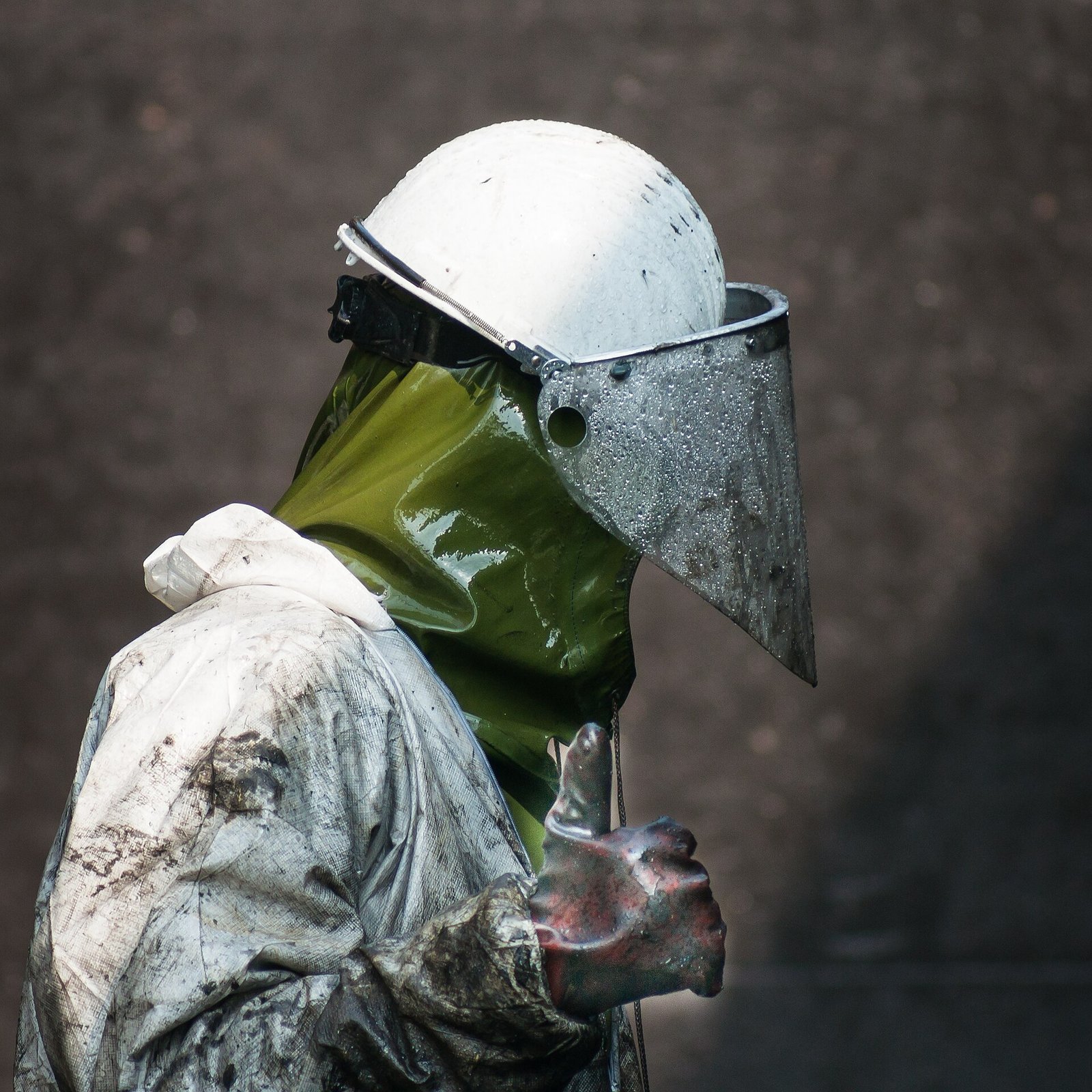
Best safety equipment
Gas detection in 2026: sensor types, fixed vs portable, and building a reliable programme
From catalytic beads to infrared imaging, a sourced guide to choosing and maintaining gas detection for confined spaces and process plants.

Gas detection is one of the oldest safety technologies — and one of the most frequently misunderstood. A detector is only useful if it has the right sensor for the hazard, it is in the right place, it has been tested, and somebody acts on the alarm. This guide walks through each of those conditions using published sources.
What a gas detector does
A gas detector is a device that detects the presence of gases in a volume of space, often as part of a safety system.1 Its job is simple: A gas detector can sound an alarm to operators in the area where the leak is occurring, giving them the opportunity to leave.1 Gas detectors can be used to detect combustible, flammable and toxic gases, and oxygen depletion.1
The history is a useful reminder of why the job matters. Through the 19th and early 20th centuries, coal miners would bring canaries down to the tunnels with them as an early detection system against life-threatening gases such as carbon dioxide, carbon monoxide and methane.1 Later, The modern era of gas detection started in 1926–1927 with the development of the catalytic combustion (LEL) sensor by Dr.Oliver Johnson.1
Where exposure happens
Exposure is not limited to chemical plants. The encyclopaedic summary lists operations such as painting, fumigation, fuel filling, construction, excavation of contaminated soils, landfill operations, entering confined spaces, etc.1 Confined spaces deserve particular attention. OSHA defines a permit-required confined space partly by whether it contains or has the potential to contain a hazardous atmosphere2, and lists examples such as tanks, vessels, silos, storage bins, hoppers, vaults, pits, manholes, tunnels, equipment housings, ductwork, pipelines, etc.2
Sensor technologies
Common sensors include combustible gas sensors, photoionization detectors, infrared point sensors, ultrasonic sensors, electrochemical gas sensors, and metal–oxide–semiconductor (MOS) sensors.1 Each has a niche:
- Catalytic bead. Catalytic bead (pellistor) sensors are commonly used to measure combustible gases that present an explosion hazard when concentrations are between the lower explosion limit (LEL) and upper explosion limit (UEL).1
- Electrochemical. Electrochemical gas detectors work by allowing gases to diffuse through a porous membrane to an electrode where it is either chemically oxidized or reduced.1 They are found in refineries, gas turbines, chemical plants, underground gas storage facilities, and more.1
- Infrared point. Infrared point sensors can be used to detect hydrocarbons and other infrared active gases such as water vapor and carbon dioxide.1
- Photoionization (PID). Fixed, hand-held and miniature clothing-clipped PIDs are widely used for industrial hygiene, hazmat, and environmental monitoring.1
- Infrared imaging. Imaging cameras detect the same compounds as point IR, but the images may be helpful in identifying the source of a gas.1
Fixed or portable?
Gas detectors come packaged into two main form factors: portable devices and fixed gas detectors.1 Fixed systems protect areas: Fixed type detectors are generally mounted near the process area of a plant or control room, or an area to be protected1, and a cable connects the detectors to a supervisory control and data acquisition (SCADA) system for continuous monitoring.1 Portable devices protect people as they move. Most sites need both: fixed detection for continuous process risk, and personal monitors for entry, maintenance and lone work.
Connected portable monitors add a further layer. Vendors such as Blackline describe Wearables with built-in GPS, gas detection, lone worker + communication3 and a support library on how our gas detection devices bump and calibrate3. Treat connectivity as an aid to response and fleet management, not as a substitute for training.
Building a reliable programme
- Match sensors to hazards. Start from the substances present, including by-products and oxygen depletion, and select sensor types accordingly.
- Set alarm points deliberately. Use the exposure limits that apply in your jurisdiction and document the response for each alarm level.
- Test before use. A bump test exposes the sensor to a known gas to confirm that it responds; calibration adjusts its accuracy. Follow the manufacturer’s schedule.
- Train users. Workers must know how to read the device, what each alarm means, and to leave first and investigate later.
- Keep records. Test logs, calibration certificates and alarm histories support audits and reveal weak spots.
How to choose a supplier
Rather than rank brands we have not tested, we recommend these criteria: certification for your hazardous-area classification; sensor options and cross-sensitivities; docking stations and software for test records; battery life; service and calibration support in your country; and total cost of ownership including sensor replacement.
Common failure modes
Investigations into gas incidents often find detectors were present but not effective. Typical causes are sensors poisoned or past their life, devices switched off because of nuisance alarms, monitors clipped outside the breathing zone, detectors placed where gas cannot reach them, and alarms that nobody was assigned to respond to. Each of these is a management failure rather than a technology failure.
A simple monthly review can catch most of them: compare the list of devices issued with test records, look for units that never alarm (which can indicate a problem as much as units that alarm often), and walk the fixed detector layout against current plant, since equipment changes can leave detectors in the wrong place. Include detector status in shift handovers for areas with continuous monitoring.
More on sensing technologies
Electrochemical gas sensors are gas detectors that measure the concentration of a target gas by oxidizing or reducing the target gas at an electrode and measuring the resulting current.4 For organic vapours, typical photoionization detectors measure volatile organic compounds and other gases in concentrations from sub parts per billion to 10 000 parts per million (ppm).5 Choose the technology for the gas, not the other way round.
Key takeaways
- Choose sensor technology by hazard: catalytic or IR for combustibles, electrochemical for toxics and oxygen, PID for VOCs.
- Use fixed detection for areas and portable monitors for people; most sites need both.
- Bump tests, calibration, training and records are what make detection reliable.
Frequently asked questions
What is the difference between a bump test and calibration?
A bump test briefly exposes the sensor to gas to check that it responds and alarms. Calibration adjusts the reading against a known concentration so it is accurate. Follow the manufacturer’s schedule for both.
Do I need a four-gas monitor for confined spaces?
Many confined-space entries use a multi-gas monitor covering oxygen, combustibles and common toxic gases, but the right configuration depends on the substances that could be present. Base it on the space’s risk assessment.
Can infrared cameras replace point detectors?
No. Imaging helps locate the source of a leak, while point detectors provide continuous measurement and alarms. They are complementary.
Where should fixed detectors be installed?
Near potential release points and in areas to be protected, taking account of whether the gas is lighter or heavier than air. Follow the manufacturer’s guidance and applicable standards.
What should a worker do when the alarm sounds?
Leave the area immediately by the planned route and report the alarm. Investigation and re-entry should be controlled by trained people.
How often should detectors be bump tested?
Follow the manufacturer and site policy; many organisations bump test portable detectors before each day’s use.
Sources
Every factual statement marked with a number links to the source below. Sources were retrieved on 23 October 2026; check the publisher for later revisions.
- Gas detector (Wikipedia) en.wikipedia.org
- Confined Spaces (OSHA) osha.gov
- Blackline Safety (vendor homepage) blacklinesafety.com
- Electrochemical gas sensor (Wikipedia) en.wikipedia.org
- Photoionization detector (Wikipedia) en.wikipedia.org