Best practices
The hierarchy of controls in practice: from elimination to PPE
Why the most reliable safety controls are designed in, not handed out — and how to apply the five levels to real tasks.

Every safety professional learns the hierarchy of controls early, usually as a triangle on a training slide. Fewer organisations apply it rigorously when they choose controls under time and budget pressure. That gap matters: the controls at the top of the hierarchy keep working on a bad day, while those at the bottom depend on people doing the right thing every single time.
The hierarchy is described as a system used in industry to prioritize possible interventions to minimize or eliminate exposure to hazards2. NIOSH lists the five levels as elimination, substitution, engineering controls, administrative controls, personal protective equipment, from most to least effective1.
Why the order matters
The logic of the ranking is reliability. Controls high in the hierarchy act on the hazard itself; those lower down act on people. As one summary puts it, Controls near the top of the hierarchy tend to remain in place once designed into a process or facility.2 and They usually do not require workers to remember a rule every time a task is performed.2
By contrast, Administrative controls and personal protective equipment can reduce risk, but their effectiveness often depends on training, supervision, availability of equipment, correct fit, consistent use, and enforcement over time.2 That does not make PPE useless — it makes it the last line of defence rather than the first.
Modern guidance treats the hierarchy as a principle rather than a mechanical rule: agencies increasingly present it as a general principle for selecting the most reliable feasible control, rather than as a rigid rule requiring one category in every circumstance2. In practice you will usually combine levels, for example a guard (engineering), a procedure (administrative) and safety glasses (PPE).
Level by level, with examples
1. Elimination
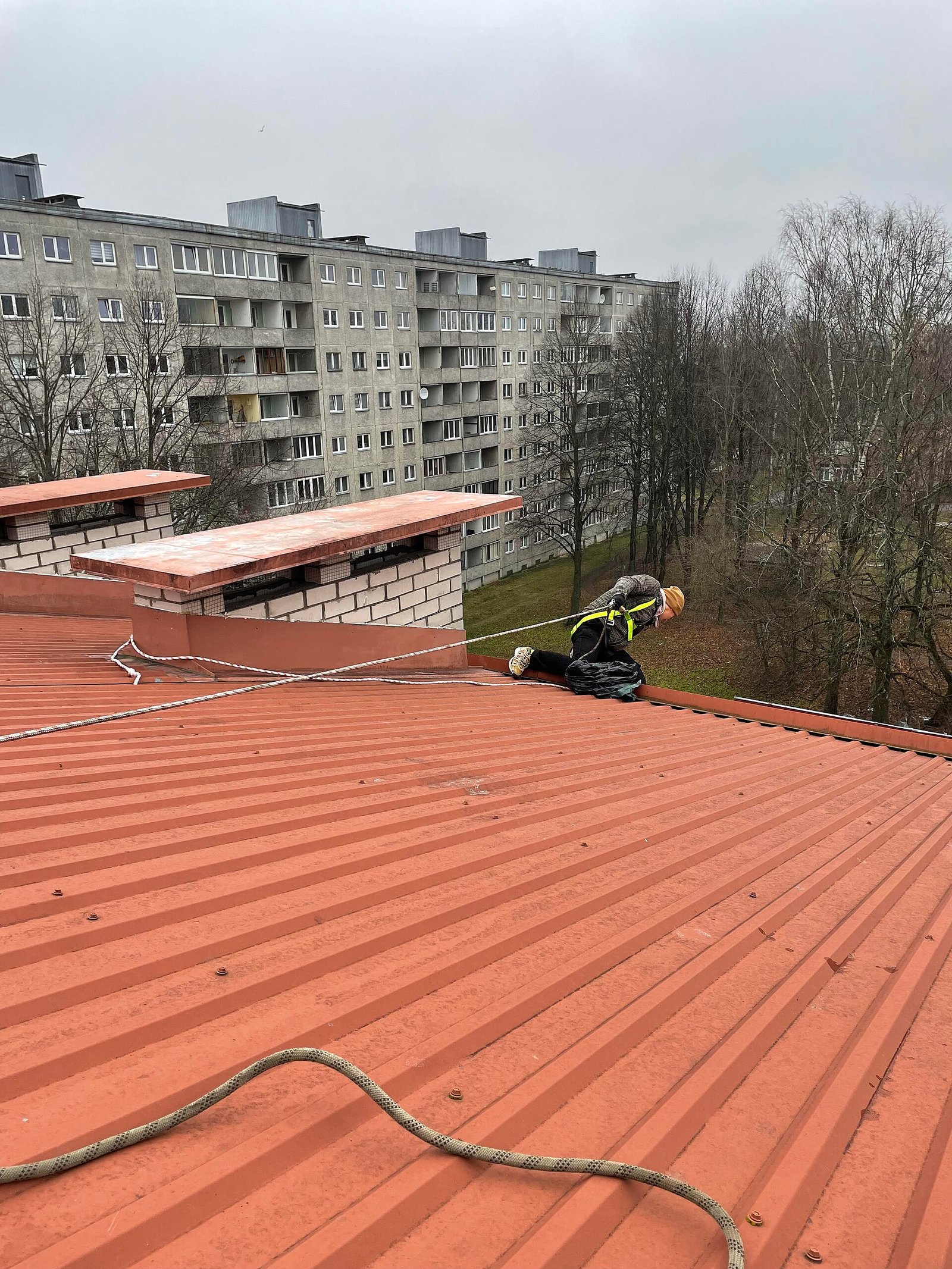
Physical removal of the hazard is the most effective hazard control.2 The classic example: if employees must work high above the ground, the hazard can be eliminated by moving the piece they are working on to ground level to eliminate the need to work at heights.2 Other examples include prefabricating assemblies at ground level, using remote inspection instead of entry, and designing out manual handling.
Elimination is not always possible. For example, construction professionals cannot remove the danger of asbestos when handling the hazardous agent is the core of the task.2
2. Substitution
Substitution, the second most effective hazard control, involves replacing something that produces a hazard with something that does not produce a hazard or produces a lesser hazard.2 The caveat is important: to be an effective control, the new product must not produce unintended consequences.2 Swapping a solvent for a less toxic one that is more flammable may simply move the risk.
3. Engineering controls
Engineering controls do not eliminate hazards, but rather isolate people from hazards.2 Typical examples are machine guards, interlocks, local exhaust ventilation, noise enclosures and guardrails. A familiar laboratory case: Fume hoods can remove airborne contaminants as a means of engineered control.2 The trade-off is cost: Capital costs of engineered controls tend to be higher than less effective controls in the hierarchy, however they may reduce future costs.2
4. Administrative controls
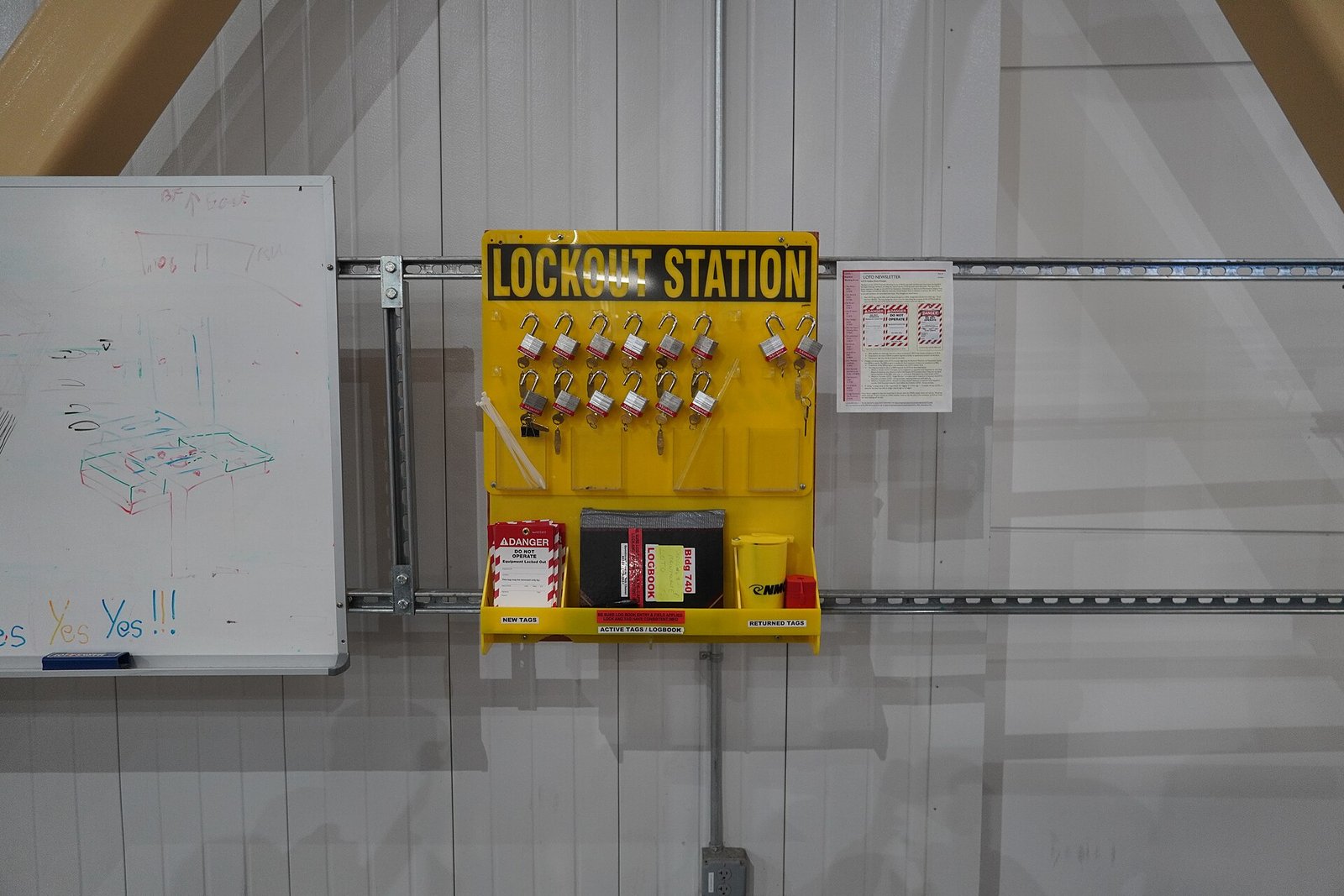
Administrative controls are changes to the way people work.2 Examples include procedures, permits, training, job rotation, signage and scheduling — for instance completing road construction at night when fewer people are driving.2
5. Personal protective equipment
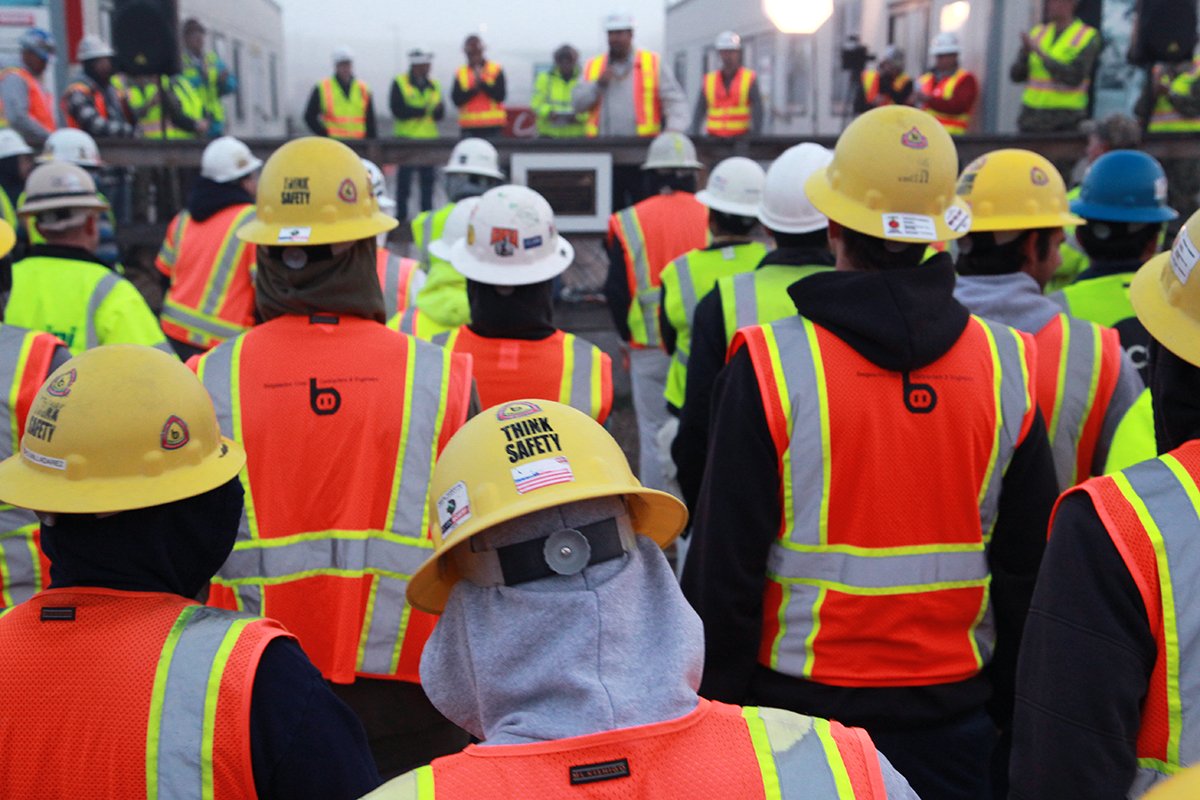
PPE includes gloves, Nomex clothing, overalls, Tyvek suits, respirators, hard hats, safety glasses, high-visibility clothing, and safety footwear.2 It works only as part of a programme. NIOSH highlights programme elements such as selection, fit testing, training, maintenance1, and the encyclopaedic summary adds that some PPE, such as respirators, increase physiological effort to complete a task and, therefore, may require medical examinations2.
A worked example: noise
Noise shows how regulation itself embeds the hierarchy. OSHA requires a hearing conservation programme when employee noise exposures equal or exceed 85 decibels (dBA) as an 8-hour time-weighted average (TWA)3, and goes further: engineering or administrative controls (which may include elimination and substitution of noise sources) are required when noise exposure is above 90 dBA as an 8-hour TWA3. Earplugs alone are therefore not a compliant answer to a 95 dBA area.
| Level | Noise example |
|---|---|
| Elimination | Remove a pneumatic process step entirely |
| Substitution | Buy a quieter machine, as OSHA suggests: using quieter machines |
| Engineering | Enclose or isolate the noise source |
| Administrative | Limit time in the area; rotate tasks |
| PPE | Fitted hearing protection plus audiometric testing |
Prevention through Design
The biggest gains come before anything is built. The hierarchy of controls is a core component of Prevention through Design, the concept of applying methods to minimize occupational hazards early in the design process.2 The idea expanded further through the development of Prevention through Design, a NIOSH initiative launched in 2007.2 Practically, it means including safety reviews in capital projects, procurement specifications and layout changes, when elimination is cheap.
Design-stage choices could involve selecting a safer chemical, changing equipment layout, automating a dangerous task, or redesigning access to reduce fall exposure.2
Watch: the hierarchy explained
How to embed the hierarchy in your system
- Make it a field in every risk assessment. For each significant risk, record which level each control belongs to and why higher levels were not feasible.
- Challenge PPE-only decisions. Require a second sign-off when a high-severity risk is controlled mainly by PPE and procedures.
- Use it in procurement. Write noise, guarding, access and chemical criteria into purchase specifications.
- Review after incidents. Ask which level failed, and whether the corrective action moves the control up the hierarchy.
- Watch for drift. Engineering controls are bypassed when they slow work down. Inspect interlocks and guards as critical controls.
Variations you will meet
Not every jurisdiction draws the triangle the same way. While the control hierarchy shown above is traditionally used in the United States and Canada, other countries or entities may use a slightly different structure.2 In particular, some add isolation above engineering controls instead of combining the two.2 The principle is constant: prefer controls that act on the hazard over controls that rely on behaviour.
Common mistakes when applying the hierarchy
Jumping straight to PPE. PPE is quick to buy and easy to show an inspector, which is exactly why it is over-used. A disciplined assessment starts at the top and documents why each higher level was not feasible.
Treating training as a control on its own. Training is essential, but it is an administrative control: it changes knowledge, not the hazard. Pair it with a physical control wherever severity is high.
Forgetting maintenance of engineering controls. Local exhaust ventilation, guards and interlocks degrade. Give each one an owner, an inspection interval and a test method, and record results.
Substituting without checking side effects. A new chemical, tool or process can bring different hazards. Run a short risk assessment on the substitute before approving it.
Not involving workers. Operators often know the simplest way to eliminate a step or redesign access. Asking them is free and frequently produces the highest-level control.
Key takeaways
- Elimination and substitution are the most reliable controls; PPE is the last line of defence.
- Combine levels, but justify why higher-level controls were not feasible.
- Design reviews and procurement are where the hierarchy is cheapest to apply.
- Regulations such as OSHA’s noise rule build the hierarchy directly into compliance.
Frequently asked questions
Is PPE ever the right primary control?
PPE can be the main practical control in some tasks, for example in health care or asbestos removal, where the hazardous agent is inherent to the work. Even then it should be supported by engineering and administrative controls, and the PPE programme must include selection, fit testing, training and maintenance.
What is the difference between elimination and substitution?
Elimination removes the hazard completely, for example by moving work to ground level. Substitution replaces the hazard with something less hazardous, such as a less toxic chemical. Substitution ranks lower because the substitute can introduce new hazards.
Do administrative controls count as engineering controls?
No. Engineering controls physically isolate people from the hazard, such as guards or ventilation. Administrative controls change how people work, such as procedures, training, signage or scheduling, and they depend on consistent human behaviour.
How do I document the hierarchy in a risk assessment?
Add a column for the control level of each measure, record whether elimination or substitution was considered, and explain why higher-level options were not reasonably practicable. Reviewers can then challenge PPE-only decisions on high-severity risks.
Where does Prevention through Design fit?
Prevention through Design applies the hierarchy during planning, design and procurement, when elimination and substitution are cheapest. NIOSH launched the initiative in 2007.
Sources
Every factual statement marked with a number links to the source below. Sources were retrieved on 23 October 2026; check the publisher for later revisions.
- Hierarchy of Controls (NIOSH / CDC) cdc.gov
- Hierarchy of hazard controls (Wikipedia) en.wikipedia.org
- Occupational Noise Exposure (OSHA) osha.gov